Revit 2018 Save to Central Always Have to Do It Again

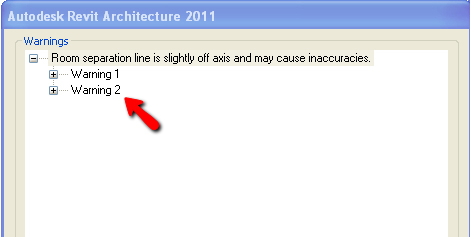
When working total steam for a deadline, information technology is easy to overlook some of the warnings Revit produces. If left unchecked for likewise long, you can amass 700, 800 or fifty-fifty 1000 warnings—which can make your model dull and cumbersome, considering it keeps looking to see if the "problems" accept been fixed. Have a moment to check how many you lot have in the model and the "quality" of those warnings. The almost common, benign and easiest to set up are warnings about rooms separation lines overlapping each other or walls and warnings saying that two items have the aforementioned type mark. More complicated warnings similar ramp slope and stair riser warnings should go reviewed right away, considering they require more complex calculations and can have a bigger impact on performance.


Revit is capable of modeling many complicated things AND brand them parametric (changeable). Yeah, you tin can model every widget in that complicated piece of equipment, simply should you? The answer is virtually likely no. If you keep the mantra of "Keep It Simple" and only model what you demand/when you demand information technology, you will wind upwardly with a smaller, easier to use model. Beware of items that come from RevitCity or manufacturers, as they typically are modeled with a lot of detail.

Revit is astonishing when information technology comes to creating views. You can create sections, elevations and 3D views with the blink of an middle. This is smashing, nonetheless, an excessive amount of views—especially 3D perspective or isometric views—tin weigh a model downwards. Once you're done using the section you cut to quickly check something, make sure to delete it. Endeavour keeping the philosophy of "proper noun information technology or delete information technology" when information technology comes to views to keep your model in bank check as you go.

This means roofs, floors, ceilings, filled regions, ramps, stairs and whatever other item that put y'all into pink lined sketch fashion. Complicated sketches using a lot of splines require Revit to process more information. This doesn't mean we shouldn't design wild curvy ceilings, it just means we should keep an eye on how that ceiling is impacting the file.

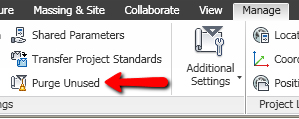
Don't be a hoarder when it comes to Revit families in your model. Keeping a modest collection of items you are sure you'll need in the future is ok, but keeping every piece of casework you loaded just in case you need information technology someday is not. If a component yous need accidentally gets purged, it can always exist loaded dorsum in.

When yous create important things like grids or levels, the tendency is to want to lock them. Locking components to other components causes Revit to review the locked human relationship every time you alter ane of the items you've locked. When you have a lot of items locked, Revit has a lot of reviewing to do. Also, if one of your grids or special items gets moved out of position, yous run the run a risk of moving all of your grids if they're locked together, catastrophically damaging your model instead of only having one filigree out of place. Try using locks just when y'all're building families in the family editor.

Groups e'er seem like a great idea at first, but they wind upward functioning differently than you look them to. Use groups sparingly and with good reason. If it seems like your grouping could be made into a static family unit, it probably should exist. Besides, be wary of the types of components you're grouping together. Wall hosted items similar sinks or doors can have issues when they're grouped away from their host (the wall), or in with non-wall hosted items like sinks or casework.

This is a huge source of file size and model functioning bug in Revit. If you absolutely must bring CAD into a Revit model, e'er save a copy of the file first and clean out the riff raff. Delete any elements that somehow snuck off into no man's country, purge the file, run the "overkill" control and audit it. Make certain when y'all type in "Z Eastward" for zoom extents that your drawing is centered on the screen.
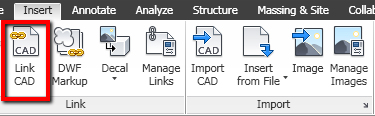
When you bring the CAD in, ever link it instead of embedding it. That way, you tin observe the file when you lot need to modify it, reload information technology or remove it. Embedded CAD has the knack of getting lost in your views. Sometimes information technology can get hidden and get hard to find.
Images are almost a separate event. When imported into the model, an image volition maintain its original size even if you scale information technology downwards in the view. If you detect yourself scaling the view downwards quite a bit, unlink it and cut downward the image size prior to loading it into the model. Keep only the images you actually need in the model and delete the remainder using the manage images tab.

These should be used very sparingly, if at all. Modeling in an outside family is actually easier than using the family editor. Too, when you copy an in-place family, information technology makes some other family. Before you know it you could have Special Casework one ,2, 3, … 25…. But use an in-identify family unit if it'southward something you tin't model outside of the project in the family unit editor.

Once you are done using a pattern option, delete it. When at that place are a big corporeality of pattern options in the model, Revit has to think about how each option influences the objects effectually it. The more you have, the more thinking that occurs and the slower your model.
OTHER Means TO HELP:
ane. Saving to Key using the "Open – Save Page"
This is a simple legend view that will help your model open up faster. Synchronizing with a 3D view open up, especially 1 that has shadows on, will accept a long time to open next fourth dimension y'all want to access the file. (Annotation: If you are using Revit 2012, it has a tool under the manage tab that allows you to designate which view you want Revit to open up the file with. Your Open up Salve Page or another pocket-size view should exist selected for this task. While you're there, make certain to cheque out the Revit Best Practices section that Jason Grant wrote. There is a lot of valuable information in there.)
2. Auditing once or twice a week
Checking this box volition requite you a alert that it will have a long time. Notwithstanding, I've never seen it have much longer than the usual load time. If you lot are ever having issues with your file crashing or behaving strangely, effort auditing it and see if that helps. Oft times it volition.
iii. Compacting the file at the terminate of the day
It really isn't much slower than your normal save to key and can help go on your file trim and efficient.
four. Over writing the model with a fresh copy
This should be done by an experienced Revit user on an as needed footing. It volition help clean up older back up and temp files, which volition make the file size smaller.
5. Put linked models on their ain workset
If linked models are on their own workset, you tin can choose not to load them. That will save you lot fourth dimension opening and saving the model.
This post was inspired past Steve Stafford of Revit Op Ed's Article "File Size – A Red Herring?" and recent sessions with MyCadd.
santiagoupostaing.blogspot.com
Source: https://www.payette.com/technology/ten-ways-to-keep-your-revit-model-speedy/
0 Response to "Revit 2018 Save to Central Always Have to Do It Again"
Post a Comment